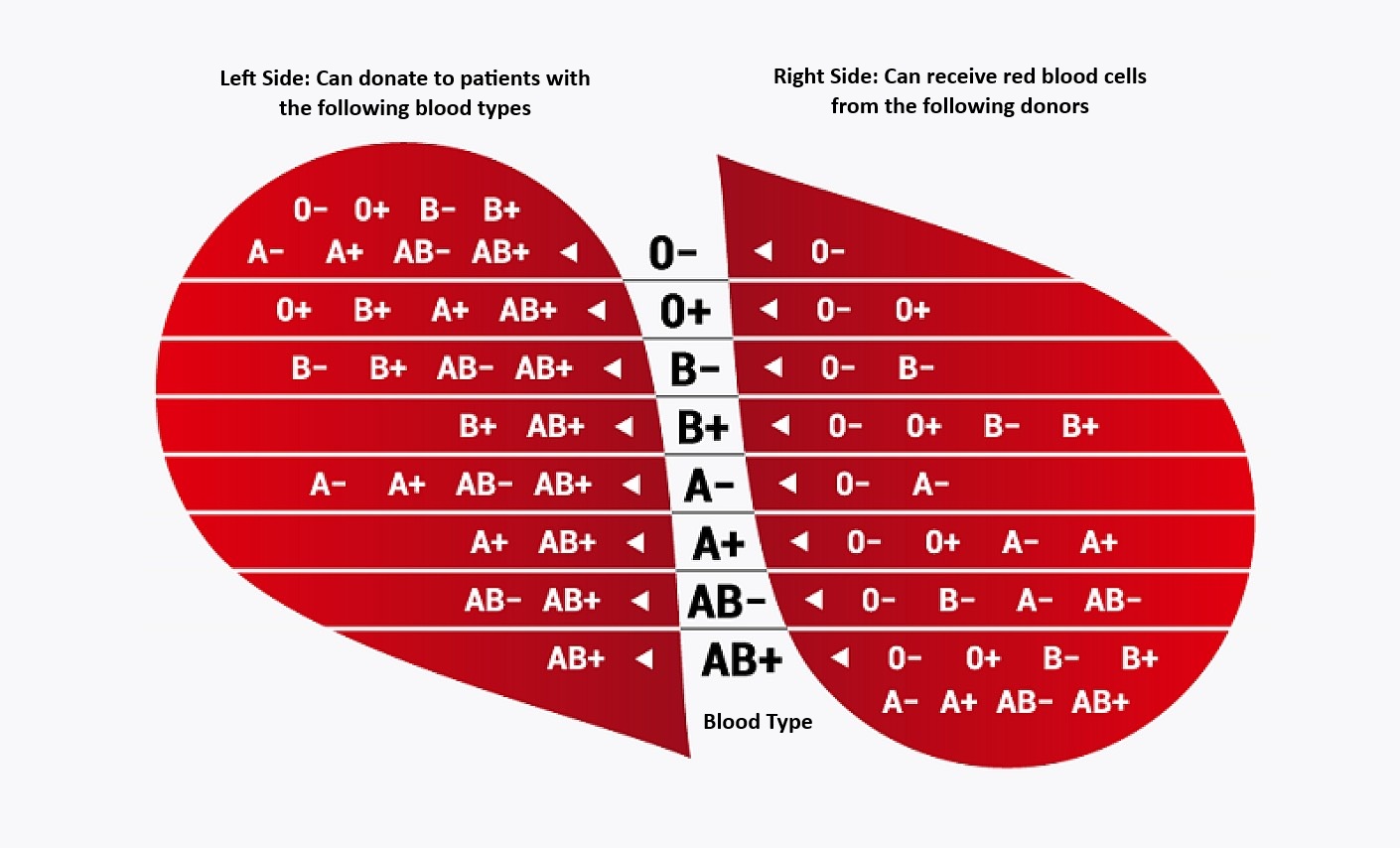
Overview: Blood Type Compatibility
Human blood types are determined by the ABO system and the Rh factor. These classifications are critical for safe blood transfusions because incompatible blood can trigger dangerous immune reactions.
ABO Blood Group System
The ABO system classifies blood based on the presence of antigens on red blood cells:
- Type A: Has A antigens
- Type B: Has B antigens
- Type AB: Has both A and B antigens
- Type O: Has no A or B antigens
The immune system produces antibodies against antigens that are not present in the person’s own blood.
Rh Factor (+ / −)
The Rh factor refers to the presence of the Rh (D) antigen:
- Rh-positive (+): Rh antigen present
- Rh-negative (−): Rh antigen absent
Rh-negative individuals should not receive Rh-positive blood, as it may cause an immune response.
Donor Compatibility
Compatibility depends on avoiding antigens that the recipient’s immune system would attack.
Key principles:
- O−: Universal red blood cell donor
- AB+: Can only donate to AB+
- Rh-negative blood can be given to both Rh− and Rh+ recipients
- Rh-positive blood can only be given to Rh+ recipients
Recipient Compatibility
Recipients must avoid donor antigens that their immune system recognises as foreign.
Key principles:
- AB+: Universal red blood cell recipient
- O−: Can only receive from O−
- Rh-positive recipients can receive Rh+ or Rh−
- Rh-negative recipients should receive only Rh−
Why Compatibility Matters
Transfusing incompatible blood can cause:
- Clumping of red blood cells (ag- glutination)
- Hemolysis (destruction of red blood cells)
- Shock, organ failure, or death
Proper blood typing and crossmatching prevent these complications.
Quick Reference